
Danny Aguirre's Books
Get Your Soul Back
Chapter 1
The Problem
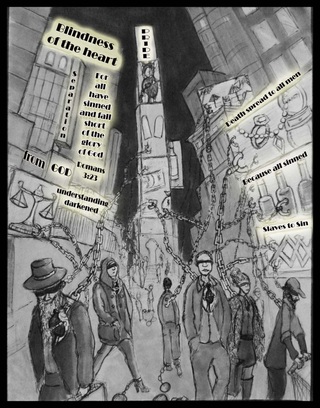
Our original goodness was infected with a disease. We brought upon ourselves a spiritual terminal illness. An enemy instigated this, but we cooperated, and it resulted in captivity for us all. No known cure exists that is within our own power. This retraces the steps of this disaster.
Chapter 2
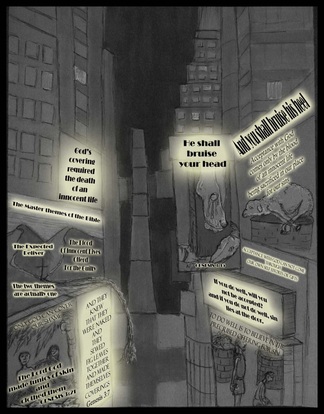
The Plan of the Ages Begins
Consider our hopeless situation:
1. Guilty
2. Without excuse
3. Without strength to deliver ourselves
4. Deserving of judgment
It is in this light that the depths of God’s love and power can be glimpsed, for He took the initiative and provided a solution to our insurmountable problems. Before the foundations of the world, God devised a plan to counter the tragic effects of the fall. God did this because, based on His nature and character, He could not do otherwise. He is full of love and mercy, and is the source of it. However, since God is perfect in all things, including His judgments, He must save us without violating His own perfectly just law. God could not simply give us a break on the penalties we deserved, but must save us in such a way that satisfies the demands of His just law. There are other obstacles as well, since for us to be truly saved, we need more than a pardon from our guilt; we need to be transformed to such a degree that we will not keep going back to our bondage to sin. It is similar to the problem of unstable people that, no matter how many times you bail them out of bankruptcy or free them from jail, they continue to do the things that got them in their predicament in the first place. They need more than a bailout or a pardon; they need transformation. When it comes to the spiritual, we are all in need of transformation. So God devised a rescue plan that would
1. Satisfy his justice,
2. Release his mercy, and
3. Transform all those willing to receive God’s deliverance.
His plan also was designed to deal with evil at its root level. The final outcome will be a thoroughly transformed people dwelling in a kingdom that is absolutely free from evil within and without. Let us now continue in this section and discover what this wonderful plan of God is.
Chapter 3
Abraham's Seed
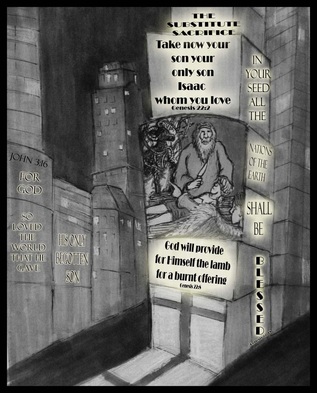
Over the next many hundreds of years after Cain and Abel, earthshaking events occurred. God dealt with the nations as a whole, but humanity eventually cast off God’s restraining influence, which unleashed sin to run amok. It became so wicked that every thought of the imagination of the heart of humanity was evil, and there was not even the possibility for change. Evidently their hearts were so hardened that there was not a single person on the earth, barring Noah and perhaps some in his family, who were willing to believe upon God’s only provision for sin, which was the sacrifice of an innocent life in the place of the guilty. The Scriptures even imply that there was some type of unholy interaction between the demonic and humans (although Bible teachers differ in viewpoint on this). Not unlike a hopelessly corrupt tree that must be cut down, God had to eliminate humanity from the world. He did this by flooding the entire planet, except for Noah and his family. After the flood, Noah built an altar and offered a blood sacrifice, which reaffirmed what God had revealed to Adam and Eve, and to Cain and Abel; namely, God will only accept the offering of an innocent life for the sins of the guilty, otherwise the guilty must pay for their own sins, and the wages of sin is death. Sometime after the flood, humanity had to be separated from one another, to protect them from the same fate of those who died in the flood. Unfortunately sin metastasizes when people have no roadblocks to do wrong, which was the case with humanity at Babel, where they were determined to use their unity for rebellion and defiance against God. Eventually God made His next major move in fulfilling His plan to save humanity by approaching a man named Abram. God would make him the father of one special nation that would belong to God. From amongst this one special nation, a family line will eventually birth the Expected Deliverer. God would also make Abram the father of many nations, as well as the father of all those who believe and receive God’s plan. Fittingly, God gave the man Abram a new name, Abraham, which meant “father of a multitude.”
Chapter 4
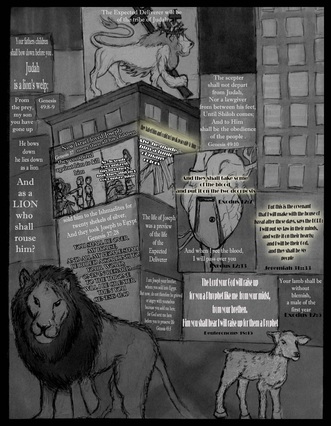
Shiloh of Judah, Joseph the Deliverer,
the Prophet Like Moses, the Passover Lamb
The family tree of the Expected Deliverer became more specific after Abraham. He had a chosen son (Isaac), grandson (Jacob), and great grandson (Judah) that were all confirmed by God as part of the family line that would someday lead to the Expected Deliverer. There was also a favored son of Jacob named Joseph, who became great in the most powerful kingdom at the time, and used his influence to save his family from starvation. However, his path to exaltation included betrayal by his jealous brothers, which led to him experiencing extreme humiliation before his exaltation. Afterward Moses burst onto the scene and was used by God to deliver by great signs and wonders the descendants of Abraham, who were under Egyptian tyranny. For God’s people to avoid His severe judgments upon the Egyptians, Moses required all the people under his charge to offer to God unblemished lambs. Moses also described a prophet who would someday come and share many traits with himself. All these major happenings were part of the history of the family line of the Expected Deliverer, and were signposts of His coming.
Chapter 5
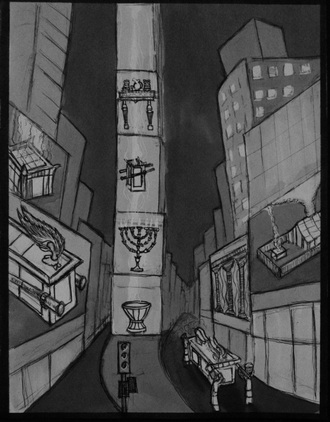
The Tabernacle Offerings
When God instructed Moses to build a tabernacle, He also instructed Moses to establish a priesthood and five major offerings that would become the main expression of worship in the tabernacle. The five major offerings were:
1. The burnt offering
2. The peace offering
3. The sin offering
4. The trespass offering
5. The grain (meal) offering (which was the only bloodless sacrifice)
These offerings were all full of symbolic meaning regarding the nature of worship, but they were also full of types and shadows related to the Expected Deliverer. However, those who had firsthand experience with the offerings, at best, only had glimpses of what the fulfillment would actually be. For the most part they didn’t recognize that the offerings had anything to do with the Expected Deliverer. It was part of the great mystery of godliness that was veiled from the world until He actually came and fulfilled all that spoke of Him. God had the Expected Deliverer in mind throughout the Old Testament era. According to His unlimited wisdom and power, God superimposed His master theme, which is the
Expected Deliverer, upon significant historical events, major institutions of worship, various prophecies, etc. This is also the case with these five major offerings. They are filled with types and shadows of the Expected Deliverer, including the work He came to do, which accomplished the salvation of all willing humanity.
Chapter 6
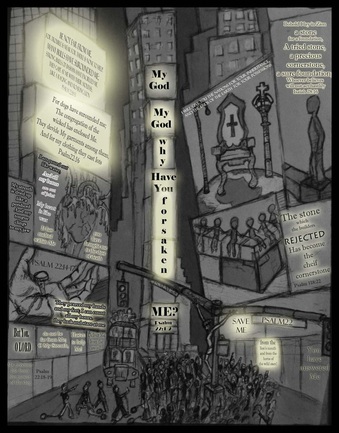
Songs of the Coming Messiah
Sprinkled throughout the Psalms, most of which were written around three thousand years ago by King David, are prophecies of the Expected Deliverer. David prophesied through songs, but he also endured many tribulations that turned out to be prophetic of the suffering experiences of the Expected Deliverer.
Chapter 7
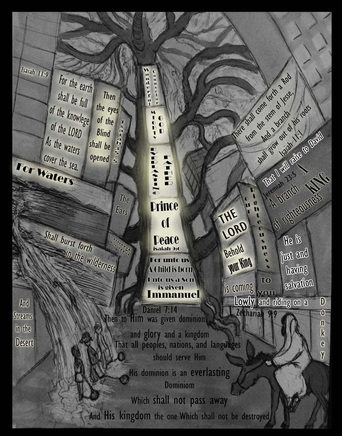
The Portrait of the Expected Deliverer
By the close of the Old Testament era (approximately 490 BC) a composite portrait of the Expected Deliverer could be scripturally pieced together. Broad brushstrokes are especially due to the ministry of Isaiah. However, Jeremiah, Zechariah, Micah, and Daniel were also chief instruments of prophecy concerning the Expected Deliverer. In actuality, all the prophets of the Old Testament directly or indirectly added to the portrait. It revolved around the Expected Deliverer all along. Keep in mind, however, that even though the Old Testament yields a clear scriptural portrait of the Expected Deliverer, no human eyes could decipher the puzzle unless the Spirit of God reveals it. When the Messiah finally did appear on the scene, even as Isaiah prophesied, His countrymen did not recognize Him, just as they couldn’t perceive the shadow of Him revealed in their Scriptures.
Chapter 8
The Set Time Had Come
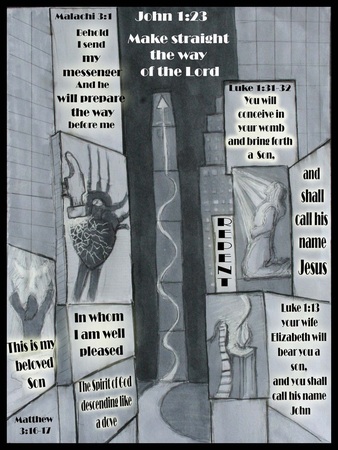
Unbeknownst to the Jewish nation (and certainly to the rest of the world), the time of waiting was over. The Daystar would arise and end the night. The fullness of time had come and Messiah would suddenly appear on the scene, but not without a voice crying in the wilderness preparing the way, as it was written in the Scriptures. The kingdom of heaven rejoiced at the birth of two Jewish infants, while the rest of the earth slumbered, except for a few humble peasants awakened by their Maker. As the infants grew to manhood, most of the human race was oblivious to the ultimate significance of the unfolding events in their generation. However, heaven’s angels marveled in amazement as they grasped the eternal importance and uniqueness of the moment.
Chapter 9
Perfect Obedience and Ultimate Sacrifice
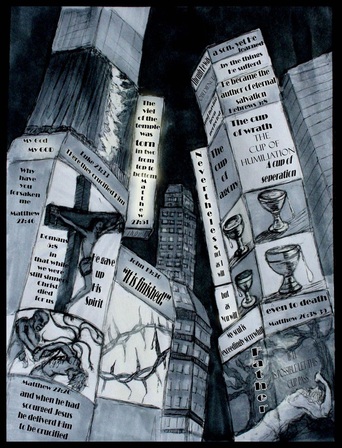
Never had one been born on the earth in order to suffer and die; and yet this was the primary mission and purpose of Jesus the Messiah. Just as His forerunner proclaimed, “Behold the Lamb of God,” Jesus came to be offered up like a lamb, as a sacrifice for sin. As the suffering Messiah, the Servant-King embraced His destiny, theologians stumbled hard, ill-mannered brutes roared with mocking laughter, cynics scoffed convincingly, and His disciples wept bitterly, losing all hope. At the moment of his death, nobody grasped that this tragic loss was the world’s greatest gain, and was intended, planned, and calculated as the fulfillment of God’s all-time solution to our problems. Jesus obeyed to the end, and finished His incomparable task.
Chapter 10
The Meaning and Purpose of
the Death of the Son Of God
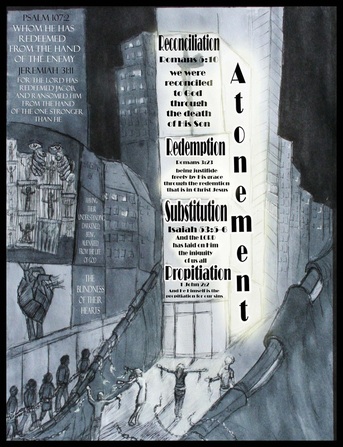
When Jesus breathed His last breath and they laid Him in a tomb, it appeared that the story was over, but this was no ordinary death. This death was an offering planned before the foundation of the world, and its significance impacts all of humanity for all times. Christ’s death was a work of atonement. The word “atonement” means “to cover, purge, purge away, or to put off.” His death was the fulfillment of the Old Testament Day of Atonement. This was a yearly Jewish holy day on which two goats were sacrificed as a sin offering for the nation of Israel. The blood sacrifice offered for the nation could only temporarily cover sins and had to be repeated every year. However, it was a day of hope, for it pointed to a superior future sacrifice that would permanently cover sin. Jesus’ death was that sacrifice. He voluntarily offered Himself for the sins of the world. There are four key theological words that describe different aspects of the atonement provided by Jesus. They are as follows: redemption, propitiation, substitution, and reconciliation. Below we will explore the meaning of these four words.